
Healthy and Happy
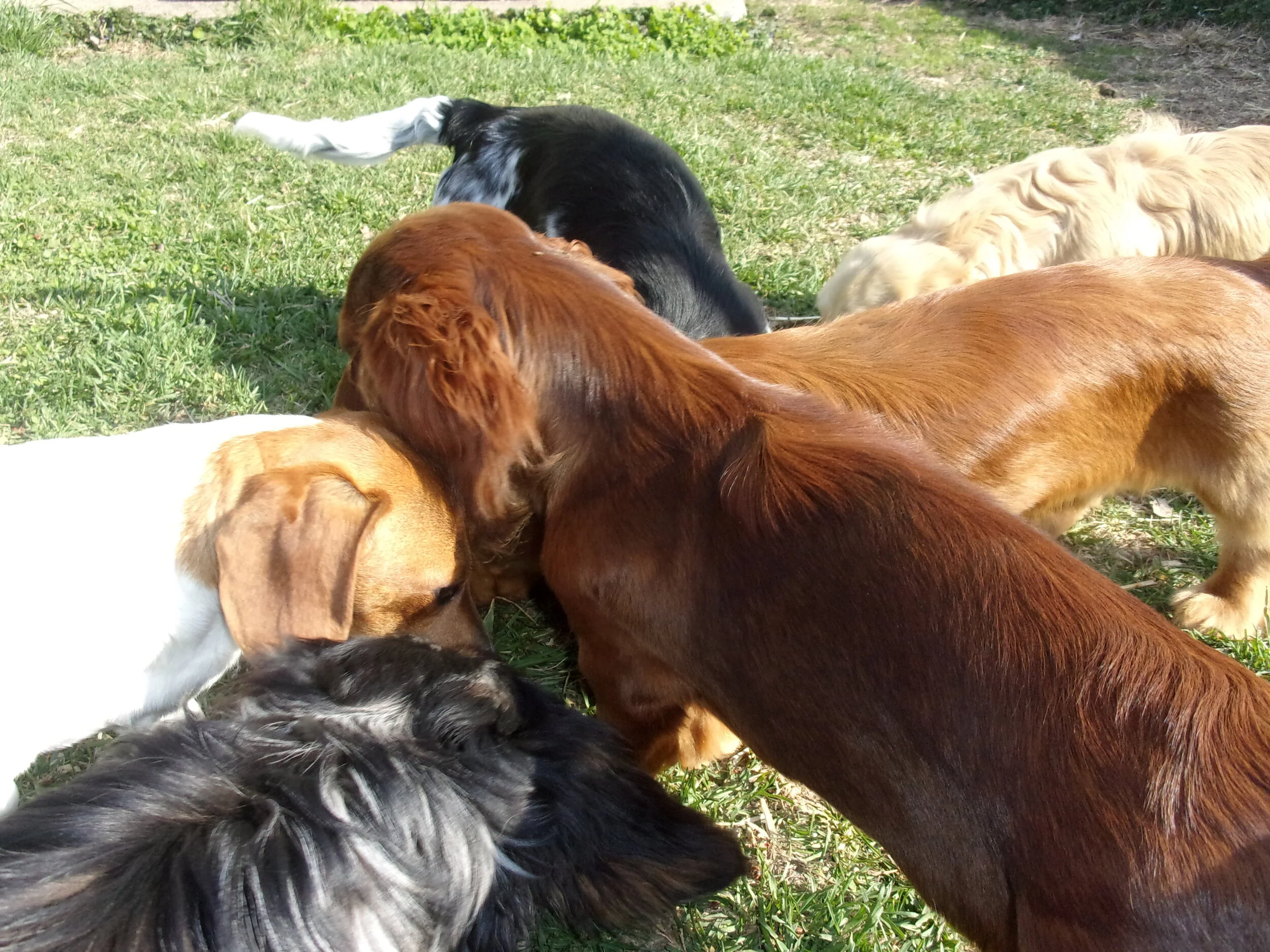
Our puppies love Diamond Naturals small breed puppy food topped with a 1/2 tsp of NuVet supplement and they do very well with it. They also receive a pre/probiotic treat and a 1/2 tsp of coconut oil daily. We feed our adults Purina Pro Plan salmon and beef dog foods. Add in 4 oz. of some treats 3 times a week, raw beef liver, sardines, salmon, raw chicken wings, any fresh, raw meat, fed to dogs of any age, should be frozen for a minimum of 48 hours, before being defrosted in a fridge, then being fed. This is a basic principle to kill pathogens. There are other principles such as 80% protein, 10% bone & 10% offal, as well as a minimum of 5 different proteins per week. boiled eggs, lightly cooked assortment of vegs and fruit. Be sure to check what foods are ok for your dogs to consume. Of course you may want to go all natural or figure out your own feedings. They also get a serving of the NuVet supplements. We give them 1 tsp Coconut oil per 10 lbs daily on top of food or in a syringe without needle, some just are picky eaters, lol. Coconut oil is a super food for your dog and yourself. A word about lauric and capric acid Coconut oil is loaded with a very powerful antimicrobial fatty acid called lauric acid, also found in breast milk. In the body, lauric acid is converted to monolaurin, which is a potent antiviral, antibacterial and antiprotozoal substance.
Coconut oil also contains another fatty acid: capric acid. Capric acid is present in very small amounts in goat’s milk and cow’s milk, but is abundant in tropical oils, including coconut oil and palm kernel oil.
It is a medium-chain fatty acid that has antimicrobial and antiviral properties. In the body, capric acid is converted to monocaprin, a form that can readily fight viruses, bacteria and the yeast Candida albicans. Coconut oil is also a natural de wormer. I also give a pre/probiotic chew daily, this helps for a healthy gut and digestive system. It helps keep those anal glands clean. Cooked oats or rice -To help abate your dog’s diarrhea, add 1-to-4 tablespoons of cooked oats or rice to your dog’s meal. It is a good idea to start out with smaller quantities to avoid adding too much fiber to your dog’s diet, and if you have any questions about exactly how much to feed your dog, consult your veterinarian. For yeast infections in their ears use 1 part apple cider vinegar to 1 part water. Clean their ears with a q-tip, you can either spray the mixture on and then dry the ears or use a q-tip to co go over all area on the underneath side. Do this twice a day, if you do not see improvement after 2 days consult your vet for a medication.

The key to supporting the lifelong health of my dogs is high quality nutrition. In order to ensure our dogs get the BEST nutrition possible, we've recently partnered with NuVet Labs! BONUS: All of my puppy families have access to order straight from the manufacturer, just like I do - click the link! This keeps costs down and maintains the integrity of every batch. Since 1997 they have had 0 batch recalls!
Order yours today! www.nuvet.com/967278
For the dilute colored coats and skin allergies I recommend a salmon based food, I use purina pro plan shredded blend salmon for the adults and Jynx all stages small breed salmon and sweet potatoe for puppies. They also get supplements daily such as melatonin, collagen, kelp, camelina oil, and or salmon oil capsules. There is no cure for CDA if they get it, but this nutrition is shown to help their hair and skin along with promote hair growth. Rub castor oil, omega 3 oil, and sunflower oils on their skin. The raw liver, raw eggs, and raw sardines are all good for this condition too. So choose which direction works best for your dog and you.


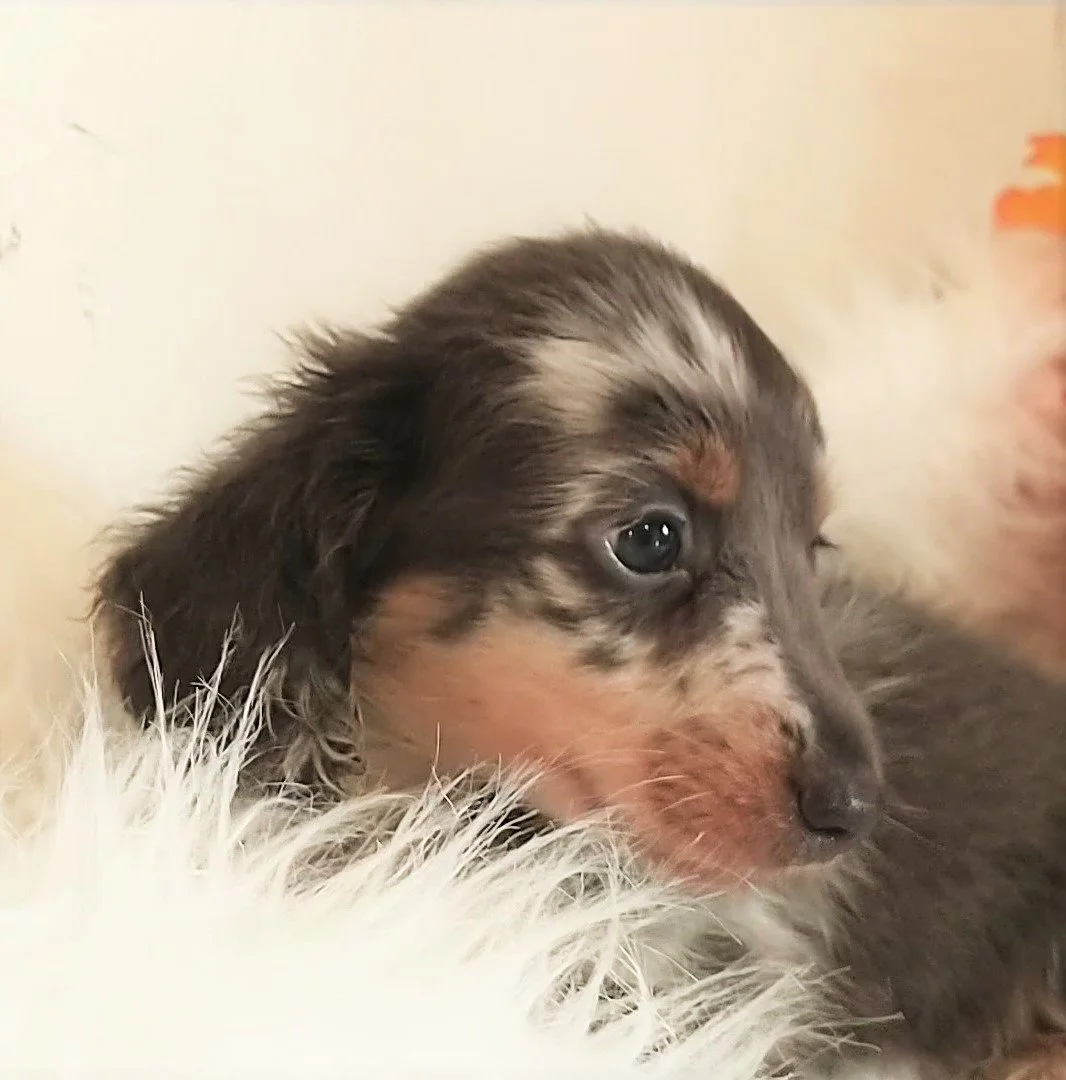
POTTY TRAINING on a grass pad/tray/pad At Doxie Do’s we believe that we should do everything we can to help you help your new puppy to become a great lifelong companion pet. We help to get their potty training off to a great start. Puppies have an instinct not to soil their den as mama has been teaching them. So about 4 weeks of age they are coming out of their box to potty. We use a grass pad or tray for a place for them to use. The grass pad will help to transition them to go in the grass outside. Puppies do not gain full control of their need to potty until around 6 months of age. So even though they know where to use here, they won’t know at their new home. And accidents will happen, so don’t expect miracles. It will be easier for you to continue their training if you set up a schedule and area for your puppy. Place their crate inside a small pen, close to the door for convenience, place the grass pad at one end. This will also be the best place for them to be while you have to be away. As they will be outside their pen to spend time with you, either open the pen for access or place another pad by the door. I include a door bell for your puppy to tell you when they need to go. You will need to ring this when you take them out to teach them to ring it. Please look at the resource link I provide to help you with this process. Set up a schedule that works best for you.
6 Smart Training Tips That Make a Difference
Start with the basics – Every dog should know the basic commands: sit, stay, come, and leave it. These skills create a base for good behavior at home and in public.
Be consistent with commands – Use the same word or phrase every time for each command. Changing your wording can confuse your dog and slow down learning.
Use high-value rewards – Find what your dog truly loves, whether that’s a soft treat, squeaky toy, or affection, and use it to motivate them during training.
Keep sessions short and positive – Dogs learn best in brief bursts. Ending on a success keeps your dog excited and ready for the next session.
Practice in different environments – Once your dog masters a command at home, try it in the yard, at the park, or around distractions to strengthen reliability.
Train a little every day – Even five minutes of focused training daily can make a big difference. It keeps skills sharp and reinforces good habits.

POTTY TRAINING in a litter box /tray/pad For those of you that can’t take your puppy outside. Use basically the same set up. Get a litter box or tray/ pad for dogs according to the adult size of your puppy. Don't use the litter crystals you use for Garfield. Don't use clumping litter. Don't use any type of cat litter unless its 100% natural. Puppies eat everything, you don’t want him eating that. Get some rabbit bedding, the compressed sawdust kind, recycled paper, or alfalfa. It’s pellet-shaped and dissolves on contact with anything wet. You only need a layer about 2 inches deep, maybe a bit less. There still can be mishaps, below is a link for help. Also you will find videos on youtube that can be helpful. Also 15 minutes after your puppy eats take him outside to the area that you want him to go potty. Take him to the same spot in your yard every time. The puppy will pee and poop in the house. Wipe it up with a paper towel and take the paper towel to that spot. Over time, about 3 days, your dog will come to associate the smell with that area.

About our pets vcaccinations= Puppies receive a Neopar vaccine for parvo at 4 weeks, this helps them to build an antibody to the virus. Then at 7 weeks they are given a 5 way DAPPv vaccine, this is for parvo, distemper, corona viruses, adenovirus 2, and parainfluenza. This is the first of a series of vaccines. Your vet will schedule the puppy’s next vaccines. I encourage any pet lover to read these articles. https://www.dogsnaturallymagazine.com/taking-the-risk-out-of-puppy-shots/ https://www.dogsnaturallymagazine.com/lifelong-immunity-vets/ I also encourage you to get the NuVet supplement, pre/probiotics, and coconut oil for your puppies, to help keep their immune system strong. Meds from the vets kill good bacteria as well as the bad. For more natural healing products for your dog please check out this site, https://www.dogsnaturallymagazine.com/three-natural.../ , better for your baby to use natural if possible.
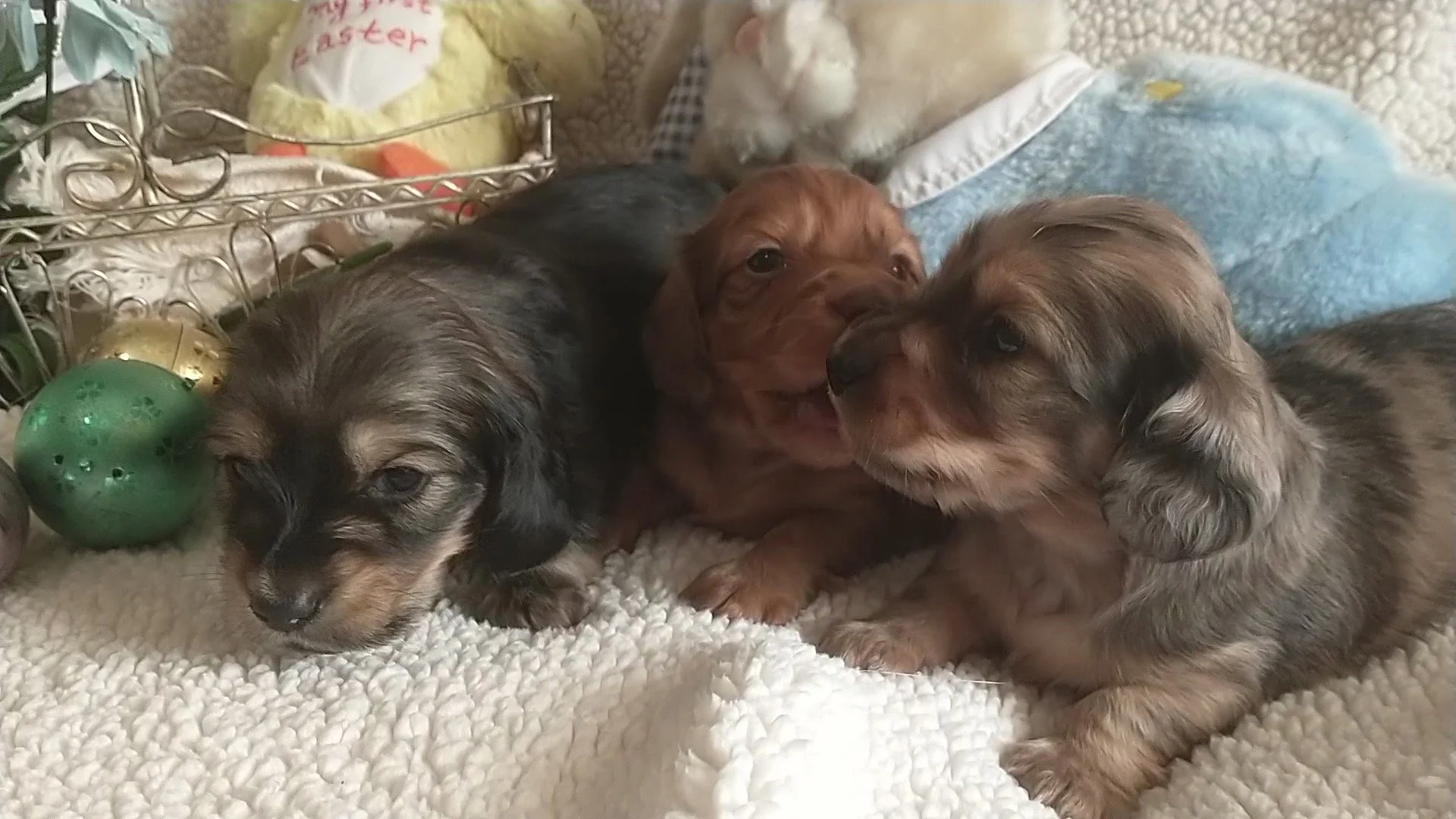
5 Exercises To Strengthen A Dachshund’s Back, IVDD is not a genetic disorder, it is a gene bred into many miniature breeds to get the smaller version of a larger dog. Your dog being overweight and jumping on their short legs, should be avoided. A strong back from the correct exercise can go a long way in keeping your dachshund from getting this or slipped discs.
Doing exercises with a dog requires some training ahead of time but nothing too specific. Once you’ve gone through the basic obedience training, the rest should be easy to do with a few treats – dachshunds are very food-motivated, after all.
1. Cavaletti Rails
Imagine putting up a row of horse jump rails for your dog. However, as you don’t want your dachshund to jump, instead, you set the rails low enough to the ground that your dachshund can step over them. The goal is to make your dog get used to stepping over obstacles without jumping. This trains the legs, shoulders, as well as back, and habits of your dachshund.
2. Walking Backward
This is very easy to do if you can build a narrow tunnel out of dog cage/kennel walls, furniture, or anything like that. The tunnel needs to be several dog lengths long and should be narrow enough for your dog to not be able to turn in it. Then, just guide your dog into the tunnel by holding a treat in front of it. Once your dog is almost at the end, start slowly moving the treat back to force your dog to walk backward. Repeat a few times and give your dog the treat.
3. All 4 Unstable Paws
This is a very simple core exercise – pick up your dog and gently put it on an unstable surface such as a balance disk, a donut, or anything similar. Even a large beachball can do. Keep the surface stable with your legs, make sure your dog doesn’t fall and keep it focused on staying up by offering a treat. The very act of keeping balance with all 4 paws on such an unstable surface is great for strengthening your dog’s core muscles.
4. Unstable On 3 Paws
As a follow-up to the previous exercise, once your dog is used to balancing on all fours on the balance disk, start gently lifting one of its paws. The idea is to get your dog used to shifting its balance on three feet on an unstable surface. Again, make sure your dog doesn’t fall and keep it focused with treats. Alternate between all four legs.
5. Swimming
Swimming is difficult to do at home but it is the king of exercises for any dog with back, joint, or weight problems. As dachshunds often have all three, it can be very beneficial to try and find a nice lake or pool for your dachshund to swim in once a week. Link to why and how to give a green lipped muscle supplement, https://thepawparent.com/pages/10-reasons-ivdd-prevention?
Helpful Links https://www.whole-dog-journal.com/blog/hold-off-on-those-oral-flea-killing-medications https://wagwalking.com/wellness/eliminating-your-dogs-nasty-tapeworms-the-natural-way https://www.natural-dog-health-remedies.com, https://www.dogsnaturallymagazine.com/three-natural.../ https://www.herlifemagazine.com/blog/pets-for-people/litter-training-puppies-modern-solutions-for-modern-dog-moms/ https://www.petmd.com/dog/wellness/evr_dg_home_remedieshttps://animals.mom.com/house-pets https://www.akc.org/expert-advice/training/clicker-training-your-dog-mark-and-reward https://pupford.com/30-day-perfect-pup-with-zak-george https://www.raisingrascal.com/ https://www.thedogbakery.com/blogs/news/top-20-healthy-homemade-dog-food-recipes-your-dog-will-love https://www.akc.org/expert-advice/training/how-to-potty-train-a-puppy/ https://vitomalia.com/en-us/blogs/news/hundegesundheit-dilute-gen-color-dilution-alopecia-cda-beim-hund-blue-line https://www.ipetskc.com/pet-health/canine-dysautonomia/ be aware, more and more cases are arising https://vetmed.tamu.edu/news/press-releases/oscar/
https://www.youtube.com/live/bIHQD1f1QG0?si=LwHn3yQdawp71c9G Video about over vaccinating your pet https://www.dogsnaturallymagazine.com/taking-the-risk-out-of-puppy-shots/ https://www.dogsnaturallymagazine.com/lifelong-immunity-vets/ https://youtu.be/XFkMCDS2bn0. IVDD https://thepawparent.com/pages/10-reasons-ivdd-prevention? https://holisticpetcare.com/articles/natural-immune-support-for-leptospirosis-prevention/
